
May 4, 2026 – The Netherlands added a dune area on the North Sea coast west of The Hague and Leiden as the country’s twenty-second national park in April. The area is “exceptionally rich” in biodiversity, with more than 7,000 plant and animal species, according to the Dutch National Parks Partnership.
The new national park covers a strip of coast from Hoek van Holland north of the Rhine estuary to the town of Hillegom in the country’s dune and bulb region, with 183 km2 officially assigned as National Park Hollandse Duinen on April 28. The park sits within a larger cooperation area of 453 km2, and covers the main natural areas and water areas, the national parks organisation said.
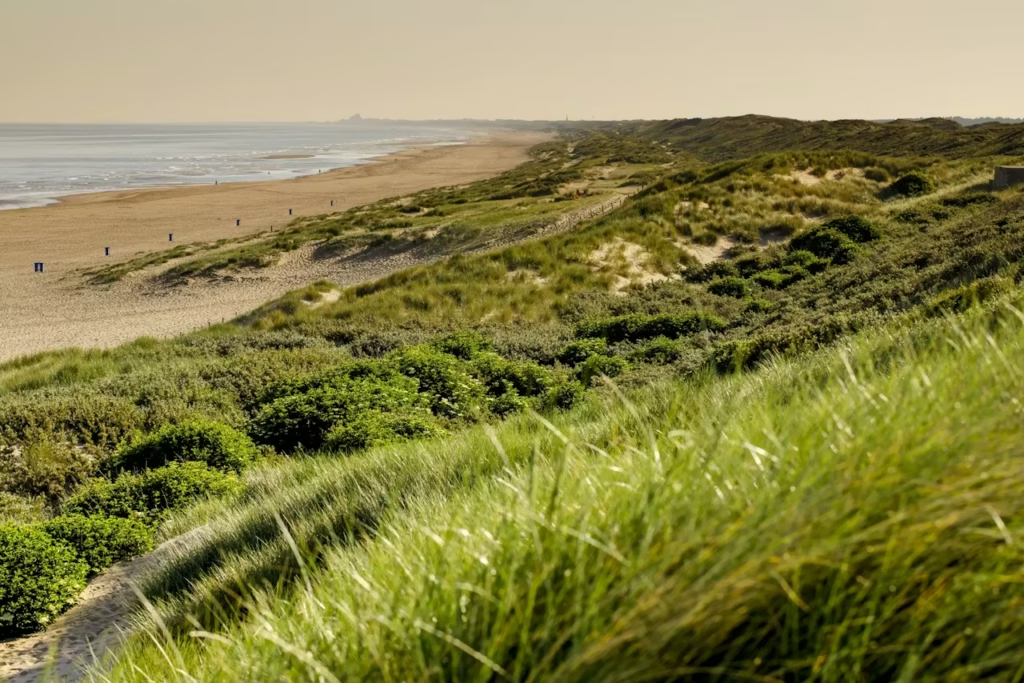
The area consists of dunes, beaches, estates, forests, peat meadows and flower-bulb fields, and an urban area with villages and cities including The Hague, the Netherlands’ third-largest city. The park has a length of 43 kilometers and is 8.5 kilometers wide at its greatest stretch, according to provincial conservation organisation Zuid-Hollands Landschap.
The territory also plays an important role for recreation, potable-water supply and coastal defences, and the combination makes the area unique and highly valuable, Zuid-Hollands Landschap said.
The official designation will open up additional opportunities for cooperation and financing, the Dutch Ministry of Agriculture, Fisheries, Food Security and Nature said in a statement.
“The Hollandse Duinen are a unique area where nature, city and coast meet,” Minister Jaimi van Essen said in the statement. “With this status, we strengthen the cooperation that is already ongoing here and the area receives a recognisable international label.”
The new park includes nature areas including the Van Dixhoorndriehoek, where Zuid-Hollands Landschap since 2013 has removed part of the sea buckthorn covering the area, allowing the dunes to drift again and creating habitat for sand lizards. The wet dune valleys are home to plants including Dactylorhiza incarnata, or the early march orchid, as well as the autumn gentian, according to the provincial organisation.
Other areas include the Staelduinse Bos, where the World War II bunkers are home to six species of bats, as well as the Nieuw Leeuwenhorst estate, with fauna including the tawny owl, Daubenton’s bat, the brown long-eared bat and the common pipistrelle, while vegetation includes large beeches as well as scanty grassland.