
May 6, 2026 – Three British wildlife charities released 4,000 eggs of the dark bordered beauty moth in Scotland’s Cairngorms National Park in a bid to establish a new population of the rare species, which is currently restricted in the United Kingdom to three known sites.
The release is ten times larger than a previous introduction in the park in 2025, the Royal Zoological Society of Scotland (RZSS) said in a statement on Wednesday. The eggs were released by a team of 20 from the RZSS, the Royal Society for the Protection of Birds Scotland and Butterfly Conservation.
The dark bordered beauty was once widespread across northern England and Scotland, and the RZSS said habitat loss has now restricted the moth species to a site in Yorkshire, England and two sites in Scotland, Deeside and Insh Marches. The caterpillars feed on aspen in Scotland and creeping willow in Yorkshire, according to Butterfly Conservation.
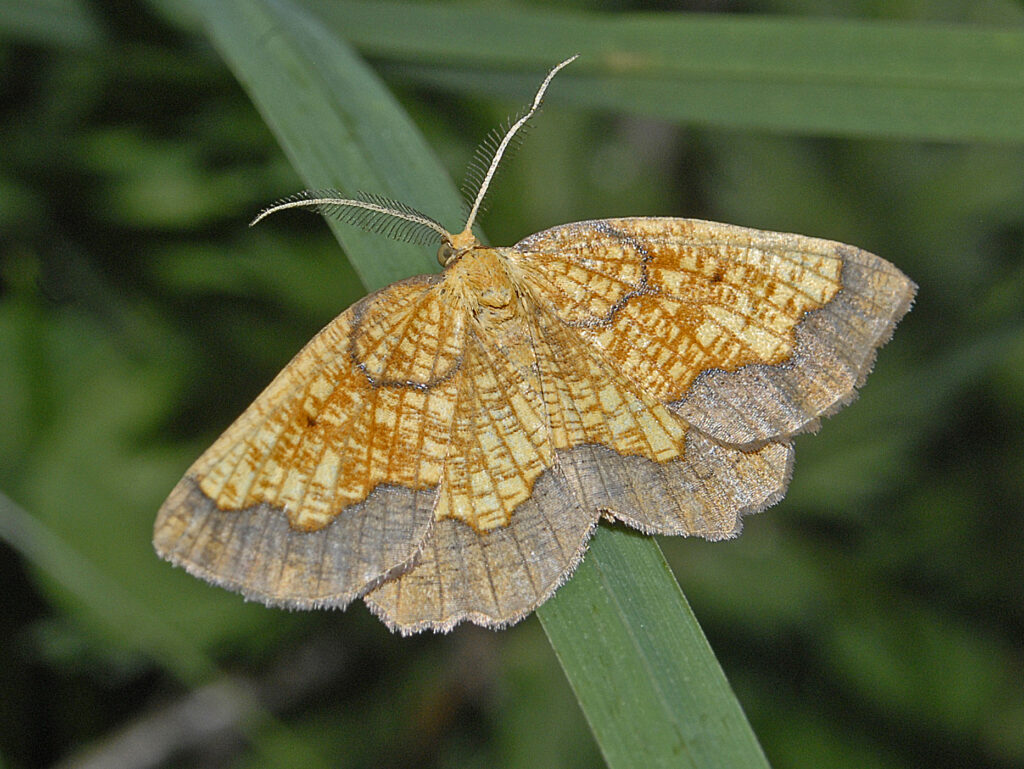
“We hope this egg release is a big step forward in securing the future of dark bordered beauty in the Cairngorms.” David Hill, head of nature recover for Scotland at Butterfly Conservation, said in the statement.
The eggs were bred by RZSS as part of the Rare Invertebrates in the Cairngorms project, and conservationists used a paint brush to place the eggs onto the base of aspen suckers on a hillside clearing in the Cairngorms National Park. Members of the project will return to the release site in July and August, using light traps to determine whether the introduction effort has been successful.
The dark bordered beauty, or Epione vespertaria, has a wingspan of 24-28mm, and the caterpillars can typically be found from May to early July, with the species overwintering as eggs on the food plant, Butterfly Conservation says. The species is observed across Europe, particularly across Scandinavia, according to the Global Biodiversity Information Facility database.